

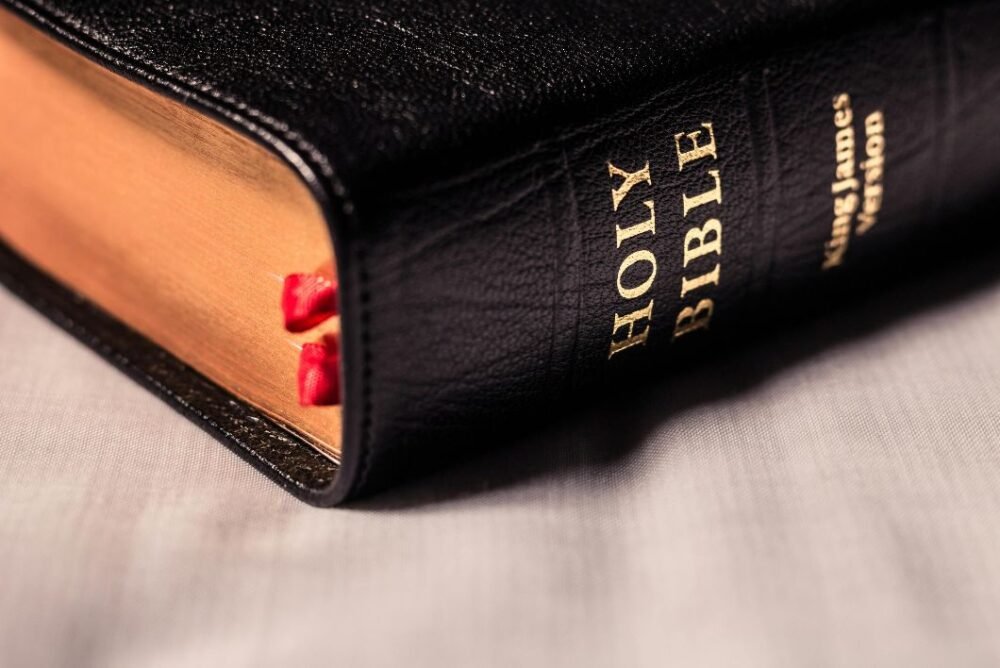
Why do we assume the Bible is exempt from the contextual interpretation we apply to every other book? It is a grave mistake to think of the Bible as a constitution or a textbook and, on that basis, assume its interpretation is forever settled.
Before I dive into this question, I need to state that I rarely delve into religious opinions because I believe faith is largely personal and ought to remain so. Yet there are questions that arise and refuse to be ignored, and sometimes the pursuit of truth demands that we ask them, and I oblige myself with that honour.
Back to the question: perhaps the answer lies in understanding two simple ideas: change and meaning.
Change is the manipulation of the elements of time and space. Meaning, on the other hand, is the subjective understanding we derive from a combination of letters, symbols, and experiences.
Truth, by its very nature, is constant. Our understanding of it is not. Meaning deepens, matures, and becomes clearer as history unfolds and as human understanding grows.
The implication of this is that, even though change is not necessarily the alteration of truth, the alteration of time, place, and circumstance changes meaning, as does our understanding of truth when it meets those changing realities.
Consider the simple question, “Is he a man?” In one setting, it may be an honest inquiry. In another, it may be a disdainful dismissal. The letters remain identical, yet the meaning changes because context shapes interpretation. If this is true of ordinary language, why should we imagine that understanding the depths of divine revelation requires nothing beyond a literal reading of ancient words?
This distinction between truth and our understanding of it is not merely philosophical; it is reflected throughout Scripture itself.
For example, in Leviticus a command regarding not wearing garments of mixed fabrics was given within a specific covenantal and cultural context as a symbol of holiness. While the principle of holiness remains, today we do not interpret this as a binding dress code but as part of a larger moral and ceremonial framework fulfilled in Christ.
The distinction between the Old and New Testaments provides evidence that God understands the phenomenon called change. His nature did not change, but His dealings with humanity unfolded progressively throughout history. The God of Sinai is the same God of Calvary. The covenant changed; God’s character did not.
The God who gave the Law is the same God who ushered in grace through Christ. The existence of both Testaments is itself evidence that God works through different covenants, different contexts, and different moments in history without compromising His nature.
Moreover, before Jesus Christ ascended, He understood that history would not end with His departure. New cultures would emerge. New questions would be asked. New circumstances would challenge old assumptions. So He did not merely leave His followers with a book; He left them with the Holy Spirit, who would guide them into truth, grant understanding, and illuminate what had already been written.
That was no accident.
A more relatable example in our day-to-day lives is how we understand technology and communication. The Bible does not mention smartphones or social media, yet the principles it teaches about speech, integrity, and guarding the heart still apply. A verse about “guarding your tongue” (such as in James) does not change, but today it also speaks to what we post online, how we comment, and how we represent Christ in digital spaces.
The letters of the Bible cannot be edited, but our understanding of them can.
Christians rightly affirm that the Bible is the Word of God, and I affirm that without reservation. Yet it would be presumptuous to conclude that God exhausted His communication simply because the canon of Scripture is complete.
The Bible is God’s written revelation and the Christian’s guide to knowing His character, His will, and His redemptive plan. But a guide was never intended to replace the Guide Himself.
Last I checked, God still exists. If that is true, and I believe it is, then He is still the same relational God revealed throughout Scripture.
Why, then, should we assume He has fallen silent?
It is only logical to believe that if God still exists, He still desires to communicate with those willing to listen—not to contradict Scripture or replace it, but to illuminate it, to bring clarity where there is obscurity, wisdom where there is confusion, and conviction where there is compromise.
The Christian life has never been merely about possessing a Bible. It has always been about walking with the Author.
God is still speaking.
So, when you encounter passages that seem difficult or controversial, resist the temptation to defend your assumptions before examining them. Pray. Study. Listen.
Ask God to clarify the controversies on your mind. He has not stopped speaking; perhaps we have stopped listening.
P.S. None of this should be mistaken for permission to excuse sin or bend Scripture to suit personal preferences. If anything, it is a call to greater humility; a reminder that while God’s truth is perfect, our understanding of it is always capable of growing.